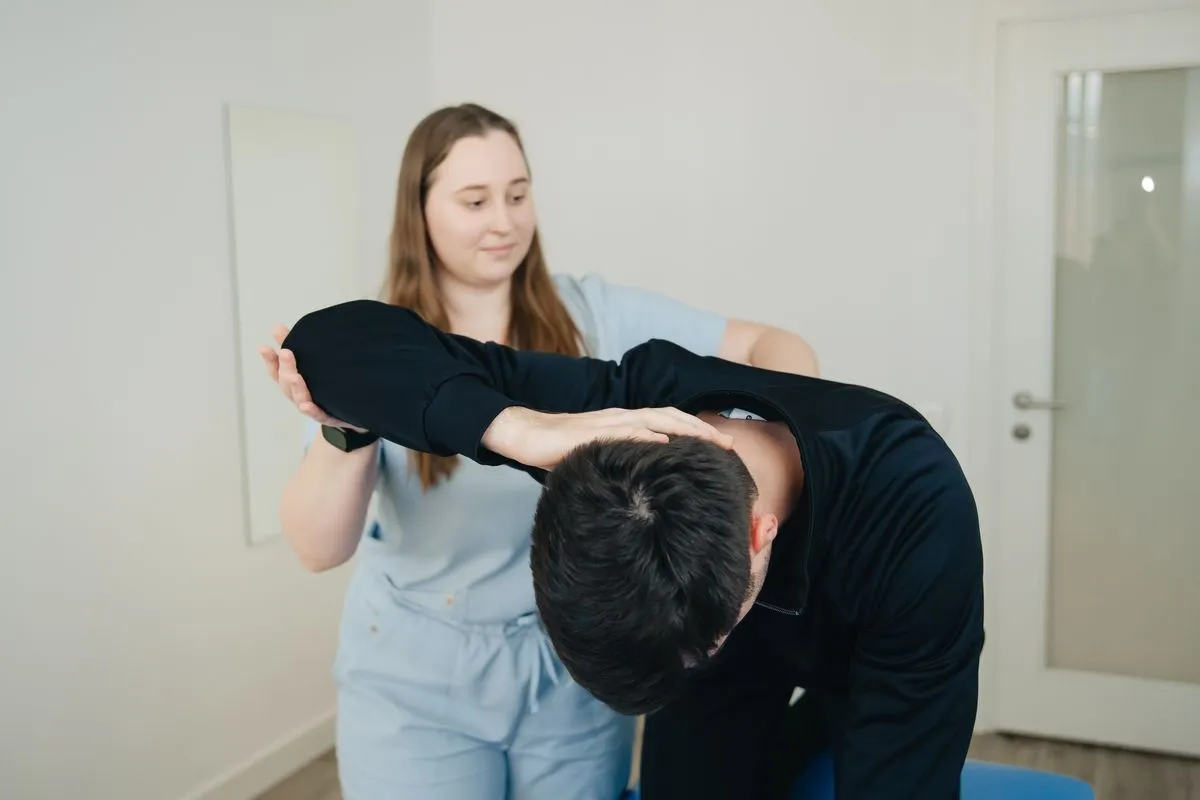
Most back pain is not dangerous, but it is disruptive
Eight in ten adults get significant back pain at some point, and for most it is not caused by anything structurally wrong. Irritated joints, guarded muscles, a disc that objects to the way it has been loaded, or a neck that has spent ten hours a day looking at a screen. The pain is real and it can be severe, but the prognosis is usually good, and the path out is movement done the right way, sooner rather than later.
We treat low back pain, sciatica and other leg pain that starts in the back, neck pain, and the headaches that come from the neck. We also screen carefully, at the first visit, for the uncommon causes that need a physician, and if we find any sign of one we say so and help you get seen quickly.
What the first visit tells us
You tell us how it started, what makes it better or worse, and how it affects your sleep and work. We then test how your spine moves, which directions ease the pain and which provoke it, and check strength, reflexes and sensation in your arms or legs. That pattern of movement tells us more than an X-ray would, and it tells us which treatment to start with that day.
How we treat it
Treatment has two parts, and we are honest about which does what.
Hands-on treatment in the early sessions: joint mobilization, manipulation where it suits you, soft tissue work and dry needling. This settles pain and gets you moving. It does not fix the underlying cause, and we will not keep doing it for months.
Exercise is the fix. A small set, usually three or four movements, chosen from what eased your pain in the exam, done daily for ten minutes. As the pain settles, the exercises shift to strength and endurance for the muscles that support your spine, because that is what stops it coming back.
We also look at the things that keep loading the back: how you sit at a desk, lift at work, and sleep. Small changes there often do as much as anything we do in the clinic.
Sciatica and nerve pain
Pain that runs below the knee, or into the arm and hand from the neck, usually means a nerve is being irritated. It responds to the same approach, with more care about which directions of movement we use, and it typically takes longer, often six to twelve weeks. Progressive weakness or numbness that is getting worse is the signal that we need a physician involved, and we watch for it at every visit.
How long it takes
Recent back or neck pain, a few weeks old, often needs four to six visits over a month. Pain that has been there for a year or more takes longer, because the muscles and the habits around it have changed too. Either way, we give you an estimate at the first visit and update it as we measure progress, and we discharge you with a program you can keep doing, not a standing weekly appointment.
Insurance
Physical therapy for back and neck pain is covered by nearly all plans and Medicare. Some plans require a referral to pay, and we check yours before your first visit.